Air Fryer vs Toaster Oven: Choose for the Meals You Cook
Affiliate disclosure: As an Amazon Associate I earn from qualifying purchases. Kitchen Daybook may receive a commission when you buy through the Amazon links in this article. Product examples are based on published descriptions, not our hands-on tests. No current prices, ratings or availability are promised.
An air fryer and a toaster oven are not always separate choices. A basket-style air fryer uses circulating hot air around food. Some toaster ovens also include convection or an air-fry setting. Before adding another appliance, check what your current oven can already do and which accessories its instructions require.
The useful comparison is between the jobs you repeat, the usable cooking space and the parts you will handle and clean. Without testing specific models, a category name cannot establish which machine will be faster, use less electricity or produce the texture you prefer.
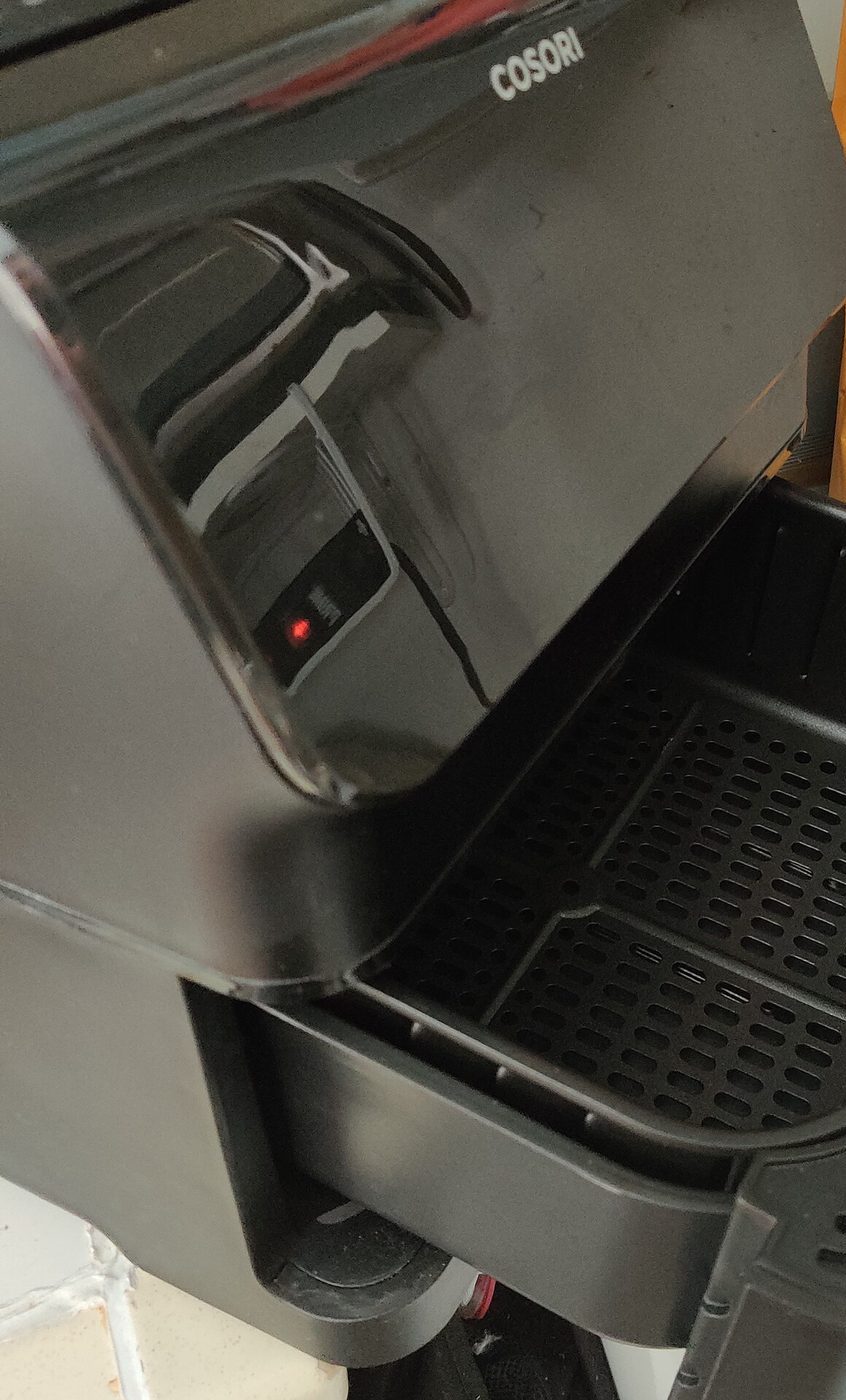

First, distinguish the designs
A basket-style air fryer typically places food in a removable basket or drawer assembly. Its shape and the manufacturer’s loading directions affect how you can arrange a batch.
A toaster oven generally provides rack positions and space for a suitable tray. Its actual functions vary: do not assume every model has a convection fan, a broiler or a particular baking mode.
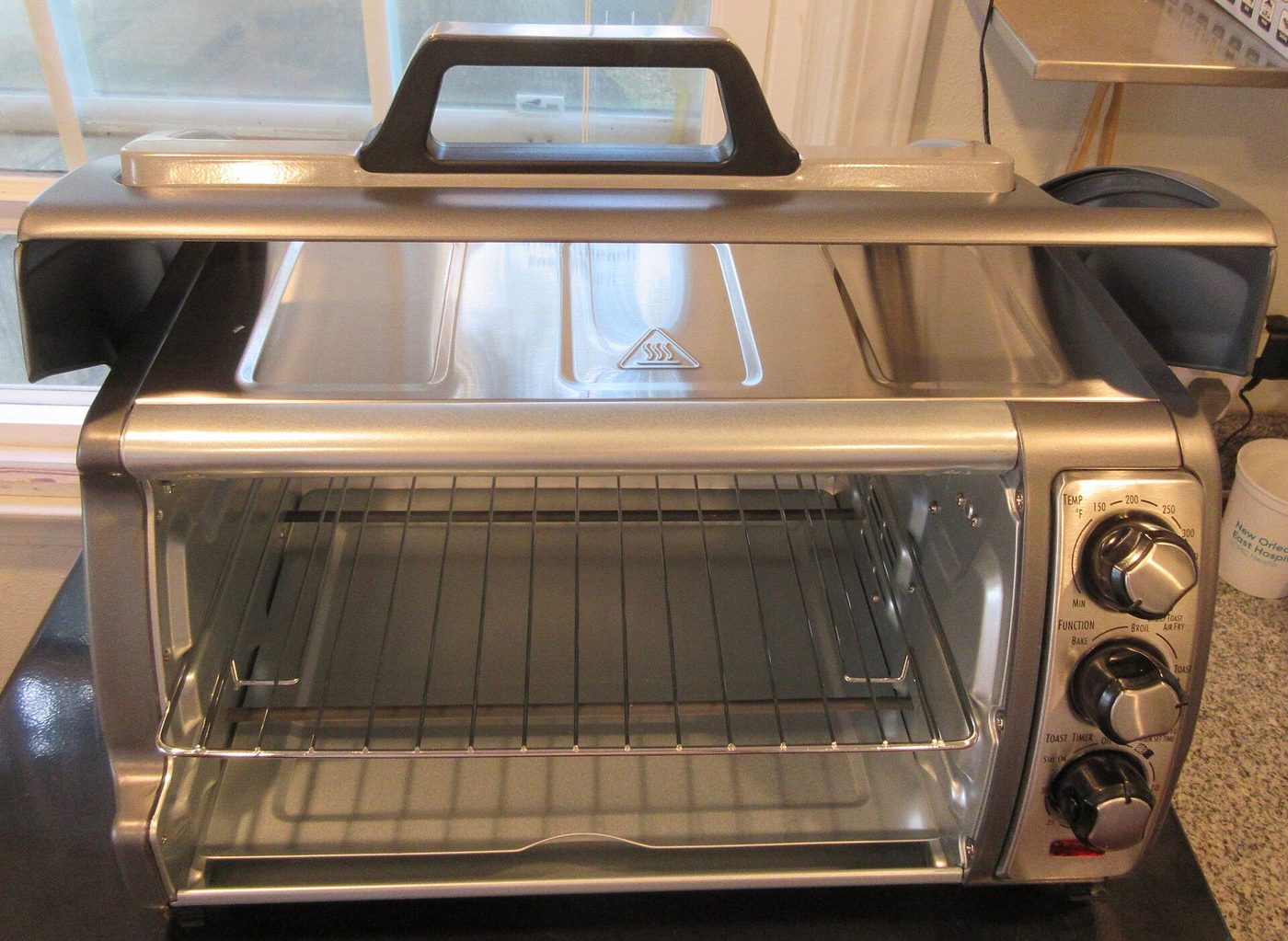

A combination air-fryer toaster oven brings some of these functions together. Breville’s comparison guide explicitly describes ovens with air-frying capabilities. That overlap is why “air fryer versus oven” is not a complete description of the purchase decision.
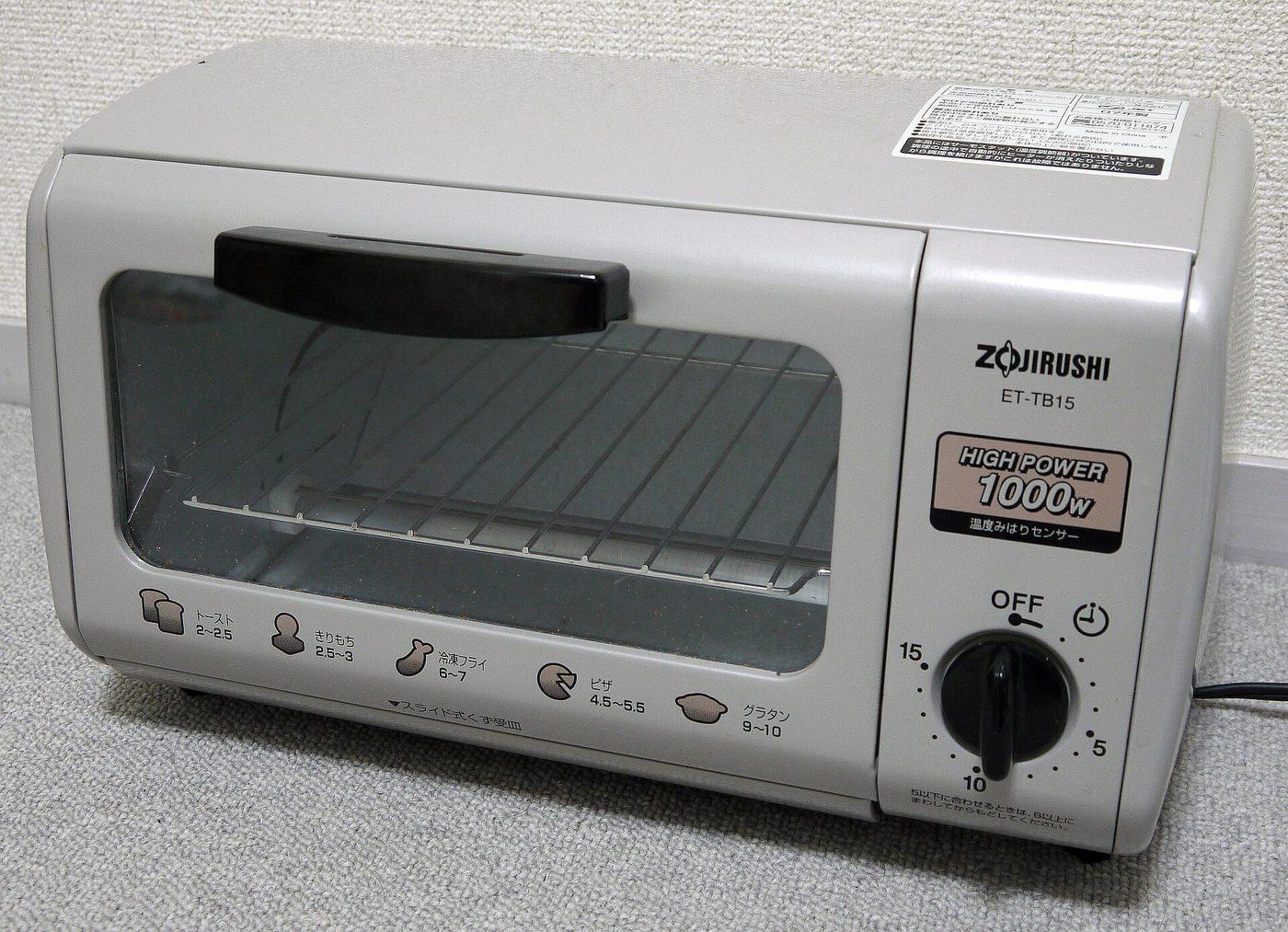

Treat named models as design examples, not winners
Start with the arrangement you want to handle. A basket appliance usually asks you to remove a drawer or basket assembly; a countertop oven asks you to work with a door, rack and tray. Those motions affect access and cleanup, but they do not by themselves establish cooking quality. Separate what the product is designed to do from how well it performs, which would require a supported test of the specific model.
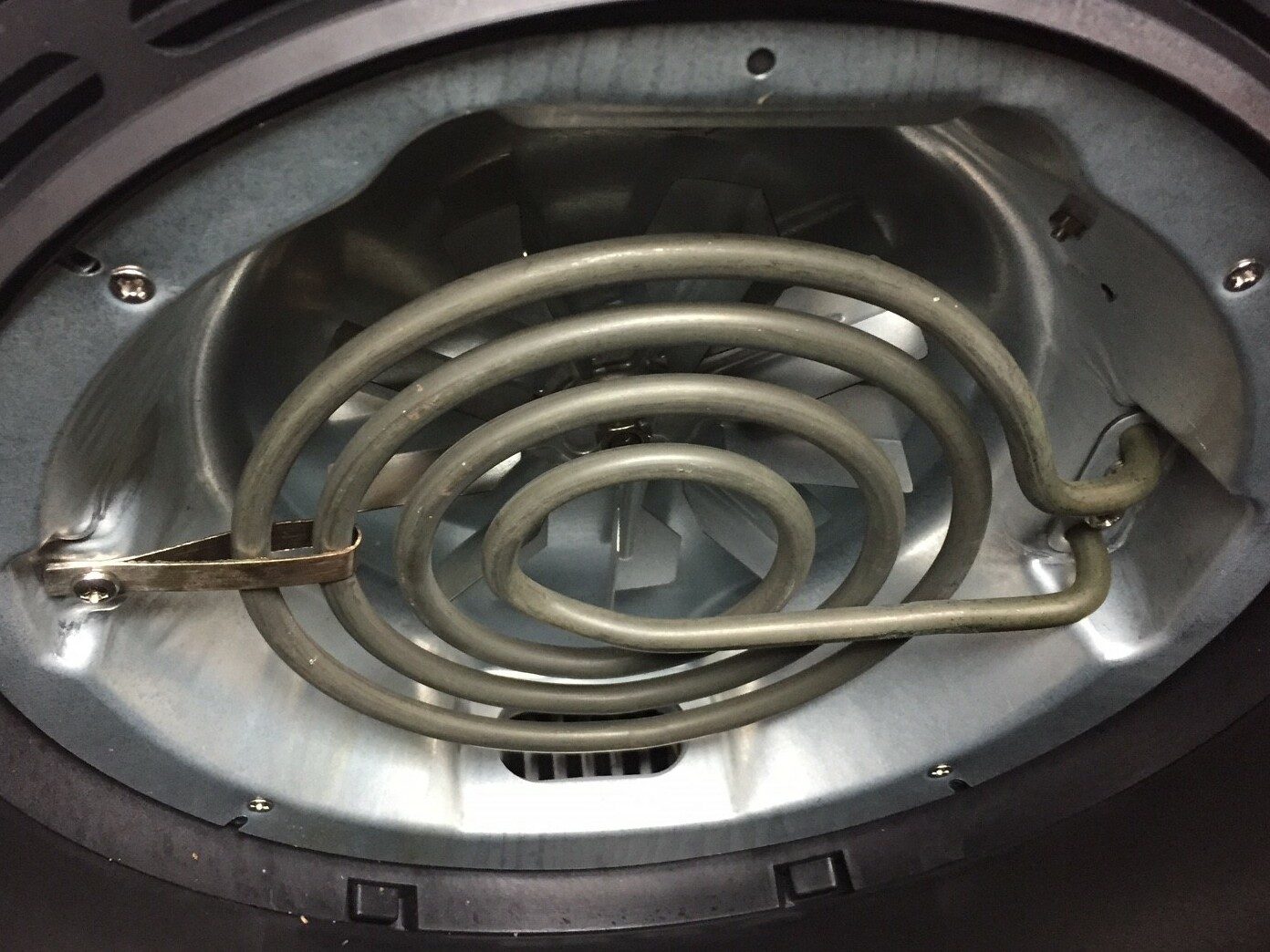

The Ninja AF101 four-quart air fryer on Amazon is a concrete basket-style example. Its listing identifies Air Fry, Roast, Reheat and Dehydrate functions and a removable basket and crisper plate. That is useful for making a function checklist. It is not a reason to assume the same loading arrangement works for every ingredient, or that every newer Ninja option uses identical accessories.
Record the model code before comparing. An online page can present neighboring sizes or a newer version, and changing the selected option can change the machine being described. Keep the basket size, supplied parts and manual attached to the same model in your notes. A review or specification from one version should not silently become evidence for another.
Write two separate questions beside the example: “Does the manual support my regular task?” and “Does this arrangement suit my available space?” A yes to the first is not a yes to the second. A countertop device can have an appropriate mode yet still require more door or drawer clearance than your kitchen provides. Likewise, a neat closed footprint does not prove a practical loading route. These checks turn a category comparison into a decision about your kitchen without claiming a universal fastest or crispiest appliance.
Compare the cooking task, not the headline capacity
| What you frequently want to do | Useful comparison | What to verify in the manual |
|---|---|---|
| Make toast | A toaster oven or combination model with a toast function | Supported arrangements and the intended rack position |
| Use a baking pan | A model with a suitable tray or rack space | Usable interior dimensions and approved bakeware |
| Use a basket-style setup | Basket model or a supported air-fry basket in a combination oven | Supplied accessories and loading instructions |
| Alternate between several cooking modes | A combination model may cover more than one task | The actual mode list, required accessories and operating directions |
What you frequently want to do
Useful comparison
What to verify in the manual
What you frequently want to do
Useful comparison
What to verify in the manual
What you frequently want to do
Useful comparison
What to verify in the manual
What you frequently want to do
Useful comparison
What to verify in the manual
These are functional checks, not test results. An appliance with an air-fry button has a named feature; that alone does not prove that it performs identically to another model.
Similarly, liters or quarts do not directly tell you how much food can be placed in the arrangement a recipe requires. Compare the usable basket or tray dimensions and the loading instructions. A deep basket and a broad tray with similar advertised capacity are not necessarily interchangeable for the same batch.
Turn capacity into a fit question
When your task depends on a pan, start with the pan you intend to use. Record its outer dimensions, including handles where relevant, and compare them with the model’s documented usable space and approved-bakeware guidance. Do not assume a nominal pan name describes its complete footprint. Nor does a large interior volume establish clearance around a particular dish in the intended rack position.
The Breville BOV900BSS Smart Oven Air Fryer Pro on Amazon illustrates a combination model rather than a simple basket appliance. The description lists thirteen functions and includes oven racks, a roasting pan and a mesh basket rack. Use those published details to identify the type of setup you would be handling. We have not verified a cooking-time advantage or reproduced the manufacturer’s performance claims.
A household headcount alone is not a reliable capacity calculation. Four people having toast, a tray of vegetables or a dish that needs a particular pan are three different arrangements. List the task and permitted loading pattern first. If you expect to prepare separate components at the same time, verify that the instructions support the intended accessories and positions together; do not infer simultaneous capacity from photographs showing a collection of trays.
Keep capacity and schedule separate too. A machine that fits one permitted batch does not necessarily replace the role of a larger oven for several dishes. Conversely, buying more interior volume than you use can create a storage trade-off without solving the recurring problem. The point of a fit worksheet is to expose those differences before purchase. Where the interior or bakeware guidance is missing, ask for it rather than calculating an exact meal capacity from quarts or an advertising photograph.
Check whether your existing appliance already closes the gap
Write down two or three meals or preparations you regularly make. Next to each, list the function and accessory actually needed. Then check your current appliance’s instructions.
If it already supports those tasks, keeping it may be the simplest answer. A second appliance should solve a specific problem—such as the absence of a required cooking mode or a tray that cannot fit—not merely add another name to the countertop.
If a product specification does not answer your question, record the missing information rather than inferring performance from wattage or the manufacturer’s promotional language.
Decide which functions actually reduce duplication
Make a simple table with one row for each preparation you repeat and columns for your existing equipment, the required mode and any missing accessory. This can reveal that the task is already covered. It can also reveal a genuine gap, such as needing a supported tray arrangement rather than a different brand name. Keep convenience preferences in a separate column so they do not masquerade as safety or performance requirements.
For an additional combined-design example, the Cuisinart TOA-70NAS air fryer toaster oven on Amazon lists several oven functions and a reversible grill/griddle among the included accessories. The destination currently identifies TOA-70NAS; do not treat every older TOA-70 package or neighboring color as automatically identical. Check the selected version’s included-parts list before counting a grill accessory as something the purchase supplies.
There is a difference between replacing a task and replacing an appliance. A combination oven may cover the task you wanted, while your existing toaster or full-size oven still serves a different routine. You do not have to retire functioning equipment to justify an experiment, but neither do you need to buy a second machine merely because it combines more mode names.
An editorial example makes the distinction clearer: if your ordinary oven already supports a suitable tray and documented convection method, the unanswered question may be whether a smaller appliance is more convenient in your space. That is a preference question, not proof the original oven cannot cook the food. If your current machine lacks a required mode, establish what that mode changes in the manufacturer’s instructions. Avoid turning a list of buttons into a ranking of results. A shorter, relevant function list can be more useful than a longer one you do not expect to use.
Include access and cleaning in the decision
Measure the space needed to open the door or remove the drawer, not just the appliance’s closed footprint. Follow the exact model’s ventilation and placement instructions. There is no universal wall clearance in this guide, and storage inside a cabinet is not permission to operate an appliance there.
Check which accessories you will need to remove and wash. Dishwasher permission, coatings and cleaning procedures are model- and part-specific. Our air fryer basket cleaning guide explains how to locate those instructions rather than applying one cleaning recipe to every basket.
For storage, use the deep-cabinet checklist to assess access. Do not treat a general cabinet organizer as a rated operating platform for a hot appliance.
Distinguish storage features from permission to operate
Some countertop ovens are designed to change position for storage. That can matter in a small kitchen, but the storage arrangement and operating arrangement must be assessed separately. A product photograph showing a device tucked against a backsplash is not an instruction to run it in that position. Cooling, movement and placement requirements belong to the exact manual.
The Ninja SP101 Digital Air Fry Countertop Oven on Amazon provides a named example of a flip-up storage design. The listing also identifies an air-fry basket, sheet pan, wire rack and removable crumb tray. Those details help you ask where the accessories will go when the unit is stored. They do not establish that the same storage benefit exists in every kitchen or authorize moving a hot appliance.
Think through the complete sequence before assigning value to the feature: permitted operating location, loading space, cooling instructions, storage position and accessory storage. A feature may solve one part of that sequence while leaving another unchanged. For example, a smaller stored footprint does not make a large tray disappear, and a front-opening door still needs room during use. Compare the entire arrangement rather than just the device’s outline in the stored photograph.
Cleaning deserves the same version-specific approach. Read the instructions for the tray, mesh basket, crumb tray and body separately. A dishwasher-safe accessory does not make the housing dishwasher-safe, and a surface described as easy to clean does not identify an approved detergent or abrasive tool. If cleanup is the main reason you want to switch, identify exactly which part of the current routine is difficult, then look for documented differences in the candidate’s procedure. That is more informative than assuming all basket machines are easier to clean than all ovens, or the reverse.
What this comparison cannot tell you
It does not establish a universal winner for crispness, speed, electricity use or cooking quality. The cited manufacturer sells countertop ovens; its marketing statements are not our measurements. We have not reproduced its calorie, energy or performance claims.
Nor is this a recipe-conversion chart. Do not apply an automatic temperature reduction or time percentage simply because you switch appliances. Follow an appropriate recipe and your model’s instructions; use authoritative food-safety guidance for handling and doneness questions. A timer alone is not a universal safety test.
A short buying checklist
Before choosing, confirm the functions you need, usable tray or basket dimensions, included accessories, allowed placement and cleaning requirements. If your current appliance already meets those needs, there is no requirement to replace or supplement it.
Use a measurement worksheet before the final comparison
You can make the final shortlist smaller by measuring once and recording what each dimension means. Note closed width, depth and height, then add separate entries for the open door or withdrawn drawer, the loading route and any placement clearances specified by the manufacturer. Do not add an invented universal clearance to every product. The purpose of the worksheet is to compare your location with the actual instructions, not to replace them.
A STANLEY PowerLock 33-425 tape measure on Amazon is one ordinary measurement-tool example. You can use an existing suitable tape instead. Measure the real space at its narrowest relevant points, and keep the unit consistent when comparing product dimensions. Record uncertainty if an obstruction prevents a useful measurement; rounding an uncertain gap into a confident fit claim does not solve the problem.
The worksheet should also name the regular task, required accessory and remaining question. For example, “tray fit not confirmed” is a useful unresolved entry. “Probably large enough” is not equivalent. Before buying, open the manual for the exact model and make sure its placement and loading requirements can be met. Do not infer electrical-circuit suitability from a wattage comparison in this article; installation and electrical questions require the appliance instructions and appropriate qualified advice.
Finish with the simplest supported outcome. Keep your current equipment when it already covers the task. Consider a basket model when its documented arrangement suits the work you repeat. Consider a combination oven when you need its actual modes and tray setup, not just a long list on the box. If the fit or instructions remain uncertain, pause the decision. This guide supplies a framework for comparing published functions, not a recipe-conversion rule, a laboratory result or a promise that a new appliance will transform every meal.
Source and scope
Source checked November 23, 2026: Breville — Air fryer vs. toaster oven. This guide uses its design and function descriptions, not its promotional performance claims. It contains no tested rankings or current prices. The commercial Amazon examples are distinct from the non-affiliate source citation here.